What to measure
How to use the snow load calculator
Choose how to work it out. Ground snow load gives the load the roof should be built for, using the ASCE 7 method that building codes refer to. Snow on the roof now weighs what’s up there today from its depth and the kind of snow.
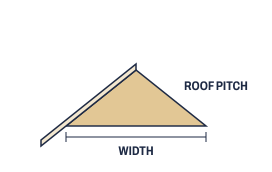
For the ground snow load method, enter your area’s ground snow load in psf. Your building department has it, or look it up by address in the ASCE Hazard Tool. Then pick the roof’s exposure to wind, how warm it is, its surface and what the building is used for. For both methods, enter the roof’s length and width at the eaves and its pitch (0 for a flat roof). If you don’t know the pitch, the roof pitch calculator works it out from a rise and run.
The result is an estimate, not an engineering check. This calculator doesn’t size rafters, trusses or beams; for those, use the span tables in the IRC (section R802) or ask a structural engineer.
The formula
- Flat-roof snow load pf = 0.7 × Ce × Ct × Is × pg
- Sloped-roof snow load ps = Cs × pf
- Snow on the roof = ps × roof length × width, the plan area, because snow load acts on the horizontal projection of the roof
- From depth: load = depth in feet × weight per foot of snow
| Factor | Choice | Value |
|---|---|---|
| Exposure Ce | Fully exposed / partially exposed / sheltered | 0.9 / 1.0 / 1.2 |
| Thermal Ct | Heated / cold, ventilated / unheated | 1.0 / 1.1 / 1.2 |
| Importance Is | Risk Category I / II / III / IV | 0.8 / 1.0 / 1.1 / 1.2 |
| Slope Cs | 1 up to the start angle, then down to 0 at 70° | see below |
Sheltered is 1.2 in suburbs and woods (terrain B) and 1.1 in open country; the calculator uses 1.2.
The slope factor starts to drop at 30° on a heated roof, 37.5° on a cold roof and 45° on an unheated one. On a slippery, unobstructed roof it starts at 5°, 10° and 15°. Metal, slate, glass and smooth membranes count as slippery; asphalt shingles, wood shingles and shakes never do. A warm roof only gets the slippery curve if it’s well insulated (R-30 unventilated, R-20 ventilated).
Worked example: 40 × 30 ft house, 6/12 shingle roof, 30 psf ground snow load
- Partially exposed, heated house: pf = 0.7 × 1.0 × 1.0 × 1.0 × 30 = 21 psf
- 6/12 is 26.6°, below the 30° where a warm shingle roof starts to shed: Cs = 1, so ps = 21 psf
- 40 × 30 = 1,200 sq ft × 21 psf = 25,200 lb of snow, or 12.6 tons
- The same roof in standing-seam metal: Cs = 1 − (26.6 − 5) ÷ 65 = 0.67, so 14 psf
Roof snow load by ground snow load
A heated house, partially exposed, at 6/12 pitch. The last column is the snow on a 40 × 30 ft shingle roof.
| Ground snow load | Shingle roof | Metal roof | Snow on 40 × 30 ft |
|---|---|---|---|
| 20 psf | 14 psf | 9.4 psf | 16,800 lb |
| 25 psf | 17.5 psf | 11.7 psf | 21,000 lb |
| 30 psf | 21 psf | 14 psf | 25,200 lb |
| 40 psf | 28 psf | 18.7 psf | 33,600 lb |
| 50 psf | 35 psf | 23.4 psf | 42,000 lb |
| 60 psf | 42 psf | 28.1 psf | 50,400 lb |
| 70 psf | 49 psf | 32.7 psf | 58,800 lb |
The IRC covers houses where the ground snow load is up to 70 psf. Above that, the roof needs an engineered design.
How much the snow on your roof weighs
| Kind of snow | Weight per foot of depth | Source |
|---|---|---|
| Light, dry fresh snow | 3 psf | FEMA P-957 |
| Typical fresh snow | 5 psf | IBHS: 10–12 in ≈ 1 in of water |
| Packed or old snow | 15 psf | IBHS: 3–5 in ≈ 1 in of water |
| Wet, heavy snow | 21 psf | FEMA P-957 |
| Ice | 57 psf | FEMA P-957 |
Packed snow is the middle of the IBHS range (4 in of snow per inch of water). Layers add up: 2 ft of wet snow is 42 psf, twice the 20 psf that IBHS says most house roofs carry before they become stressed.
Common mistakes
- Using the ground snow load as the roof load. A heated, partly exposed roof carries about 70% of the ground load, not all of it. A sheltered or unheated roof carries more.
- Counting the sloped roof area. Snow load is per square foot of plan area (length × width), not of the longer sloped surface.
- Calling shingles slippery. Snow doesn’t slide reliably off asphalt or wood shingles, so they keep Cs = 1 up to 30° on a heated house.
- Forgetting drifts. Snow piles up against walls, chimneys and higher roofs, often far above the balanced load. If your roof has a step or a parapet, ask an engineer.
- Ignoring the warning signs. FEMA lists sagging ceilings or roof members, popping or creaking noises, cracked wood and doors or windows that stop closing. If you see them, get everyone out and call your building department or an engineer.
Frequently asked questions
How much does a foot of snow weigh on a roof?
Between 3 psf for light, dry snow and 21 psf for wet, heavy snow, according to FEMA. Typical fresh snow is about 5 psf per foot and packed or old snow about 15. One foot of typical fresh snow on a 40 × 30 ft roof weighs about 6,000 lb.
How much snow can a roof hold?
IBHS says most house roofs in good repair can carry about 20 psf of snow before they become stressed. IBHS puts that at roughly 4 ft of fresh snow or 2 ft of old snow; at this page's packed-snow figure of 15 psf per foot, it is closer to 1⅓ ft. Roofs in snowy areas are built for more, so ask your building department what yours was designed for.
Where do I find the ground snow load for my address?
From your local building department, which sets the value builders must use, or from the ASCE Hazard Tool, which looks it up by address. The IRC also prints a ground snow load map in section R301.2, but mountain areas need a site-specific value.
How is roof snow load calculated?
The flat-roof load is pf = 0.7 × Ce × Ct × Is × pg, where pg is the ground snow load and Ce, Ct and Is adjust for wind exposure, heat loss and how important the building is. Multiply by the slope factor Cs to get the sloped-roof load ps, which acts on the roof's plan area.
Does a steep roof hold less snow?
Only once snow can slide off. On a heated house with shingles, the load doesn't drop until the roof is steeper than 30°, about 7/12. A slippery, unobstructed roof such as standing-seam metal sheds snow from 5°, so a warm 6/12 metal roof carries about two thirds of the flat-roof load.
Is this the design snow load for my roof?
No, it's an estimate of the balanced snow load, not an engineering check. A design also covers drifts against walls and higher roofs, uneven loading on gable roofs, sliding snow, rain on snow and a code minimum on low-slope roofs. Rafter and truss sizes come from the IRC span tables or an engineer.
My ground snow load comes from ASCE 7-22. Does the calculator still work?
Roughly. This calculator follows ASCE 7-16, the edition behind the 2021 IBC and IRC. ASCE 7-22 maps already include the building's risk category, so choose "House or ordinary building" (Is = 1.0) with a 7-22 value, and treat the result as approximate, because some 7-22 factors changed.
How much does ice on a roof weigh?
About 57 psf per foot of ice, or just under 5 psf per inch. One inch of ice weighs about as much as a foot of fresh snow, which is why ice dams and refrozen snow load a roof so quickly.
Sources
- FEMA P-957 Snow Load Safety Guide — snow and ice weights
- FEMA — Snow Load Safety Guidance (warning signs of an overstressed roof)
- Building America Solution Center (PNNL) — Managing snow loads on roofs and decks
- Utica National — snow and roofs (IBHS fresh and packed snow figures)
- NYC Building Code 2014, Section 1608 and Table 1604.5.2 (IBC snow factors Ce, Ct, Is), on UpCodes
- Engineers Edge — sloped roof snow loads (warm, cold and slippery roofs)
- Struware — ASCE 7-16 Guide to the Snow Load Provisions, example 13-3
- Calcs.com — snow loads to ASCE 7-22 (changes from ASCE 7-16)
- ASCE Hazard Tool — ground snow load by address
Formulas and defaults last reviewed October 30, 2026. How we check our math.