What to measure
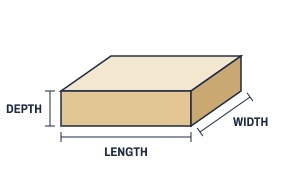
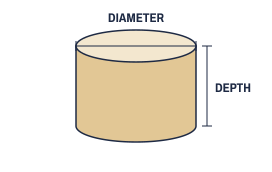
How to use the mulch calculator
Pick a rectangle or a circle and enter the bed size and the mulch depth. For an odd-shaped bed, split it into rectangles and add the results, or measure the length along the middle and use the average width. Add a bulk price per cubic yard to see the cost.
The formula
- Cubic feet = length × width × depth (all in feet)
- Cubic yards = cubic feet ÷ 27
- Bags = cubic feet ÷ bag size (2 or 3 cu ft), rounded up
Worked example: 10 × 10 ft bed, 3 in deep
- 10 × 10 × (3 ÷ 12) = 25 cu ft
- 25 ÷ 27 = 0.93 cubic yards
- 25 ÷ 2 = 12.5 → 13 bags of 2 cu ft, or 25 ÷ 3 = 8.3 → 9 bags of 3 cu ft
How deep to mulch
| Where | Depth | Note |
|---|---|---|
| Trees and shrubs, well-drained soil | 3–4 in | Wood chips or shredded bark |
| Trees and shrubs, heavy clay | 2–3 in | Thinner so the soil can breathe |
| Topping up an old bed | To the target | Measure what is left first |
| Around trunks | 0 in for 6 in | Leave a gap around the trunk |
Tree and shrub depths and the trunk gap are Iowa State Extension’s recommendations.
Mulch by bed size
| Area | Depth | Cubic yards | 2 cu ft bags | 3 cu ft bags |
|---|---|---|---|---|
| 50 sq ft | 3 in | 0.46 | 7 | 5 |
| 100 sq ft | 2 in | 0.62 | 9 | 6 |
| 100 sq ft | 3 in | 0.93 | 13 | 9 |
| 200 sq ft | 3 in | 1.85 | 25 | 17 |
| 300 sq ft | 3 in | 2.78 | 38 | 25 |
| 500 sq ft | 3 in | 4.63 | 63 | 42 |
| 1,000 sq ft | 3 in | 9.26 | 125 | 84 |
| 1,000 sq ft | 4 in | 12.35 | 167 | 112 |
Common mistakes
- Mulch volcanoes. Piling mulch up the trunk keeps bark wet and invites rot and rodents. Spread it flat and keep it back from the trunk.
- Adding a full layer every year. Old mulch breaks down slowly. Measure the depth left and only make up the difference, or the layer gets too deep.
- Measuring the bed’s outer edge on a curve. Use the length along the middle and the average width, or the total comes out high.
- Confusing cubic feet and cubic yards. Bags are sold in cubic feet, bulk in cubic yards. 27 cu ft make one yard, so one yard is 13.5 bags of 2 cu ft.
Frequently asked questions
How deep should mulch be?
Iowa State Extension recommends 3 to 4 inches of wood chips or shredded bark around trees and shrubs on well-drained soil, and 2 to 3 inches on heavy clay. Thinner layers don't stop weeds; deeper ones can keep air and water from the roots.
How much area does a yard of mulch cover?
One cubic yard covers 162 sq ft at 2 inches, 108 sq ft at 3 inches and 81 sq ft at 4 inches.
How many bags of mulch are in a yard?
A cubic yard is 27 cubic feet, so 13.5 bags of 2 cu ft or 9 bags of 3 cu ft.
How much does a 2 cu ft bag of mulch cover?
8 sq ft at 3 inches deep, 12 sq ft at 2 inches. A 3 cu ft bag covers 12 sq ft at 3 inches.
How much mulch for a 10 × 10 ft bed?
At 3 inches, 25 cubic feet, which is 0.93 cubic yards, 13 bags of 2 cu ft or 9 bags of 3 cu ft.
How much mulch goes around a tree?
A 6 ft circle 3 inches deep holds about 7 cu ft, so 4 bags of 2 cu ft. Keep the mulch at least 6 inches from the trunk, as Iowa State advises; mulch piled against bark invites rot and rodents.
Should I remove old mulch before adding new?
Not usually. Measure what is left and top it up to the target depth. If the old layer is already 3 to 4 inches, rake it to freshen the colour instead of adding more.
Is bulk or bagged mulch cheaper?
Compare the bag count × bag price with the yard price plus delivery; the calculator shows both counts. Bulk tends to win on large jobs, and bags are easier to move and store for a few small beds.
Sources
Formulas and defaults last reviewed October 30, 2026. How we check our math.