What to measure
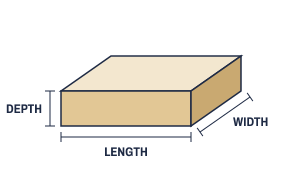
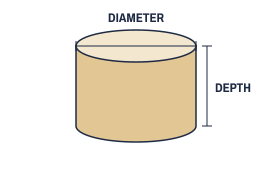
How to use the topsoil calculator
Measure the area as a rectangle or circle, choose the depth, and keep 10% for settling. For an irregular bed, split it into simple shapes and add the results. Results are given both as cubic yards (bulk) and as bag counts for the three common bag sizes.
The formula
Cubic yards = length × width × depth (all in feet) × 1.10 ÷ 27
For bags, divide the cubic feet by the bag size and round up.
Worked example: 10 × 10 ft bed, 4 in deep
- 10 × 10 × (4 ÷ 12) = 33.33 cu ft
- Plus 10%: 36.67 cu ft = 1.36 cubic yards
- Bags: 36.67 ÷ 0.75 = 48.9 → 49 bags of 0.75 cu ft (or 37 of 1 cu ft, 25 of 1.5 cu ft)
- Weight: about 1.49 tons
Recommended depths
| Use | Depth |
|---|---|
| Top-dressing a lawn | ¼–½ in |
| New lawn from seed or sod | 4–6 in |
| Flower beds | 6–8 in |
| Vegetable garden, raised beds | 8–12 in |
Topsoil by lawn and bed size
With 10% for settling.
| Project | Depth | Cubic yards | 1 cu ft bags |
|---|---|---|---|
| 4 × 8 ft raised bed | 8 in | 0.87 | 24 |
| 10 × 10 ft garden bed | 6 in | 2.04 | 55 |
| 1,000 sq ft lawn, top-dressing | ½ in | 1.7 | 46 |
| 1,000 sq ft new lawn | 4 in | 13.58 | 367 |
| 2,000 sq ft new lawn | 4 in | 27.16 | 734 |
| 2,000 sq ft new lawn | 6 in | 40.74 | 1,100 |
Common mistakes
- Measuring a raised bed from the outside. The boards take up space. Use the inside length and width.
- Top-dressing too thick. More than about half an inch at once smothers the grass, as noted above.
- Counting bags by weight. Bag sizes are listed in pounds and cubic feet; the cubic feet is what fills the bed.
- Filling on top of compacted subsoil. Loosen the ground underneath first so roots and water can get through.
Frequently asked questions
How deep should topsoil be for a new lawn?
4–6 inches gives grass roots room to establish. For top-dressing an existing lawn, spread no more than about half an inch at a time so the grass isn't smothered. Vegetable and flower beds do best with 6–12 inches.
How many bags of topsoil are in a cubic yard?
36 bags of 0.75 cu ft (the common 40 lb bag), 27 bags of 1 cu ft, or 18 bags of 1.5 cu ft. Past about one cubic yard, bulk delivery is usually cheaper.
How much does a yard of topsoil weigh?
About 1.1 tons (2,200 lb) when dry. Moisture and clay content push it higher — 1.35 tons or more for wet, heavy soil.
Should I add extra topsoil for settling?
Yes, about 10–15%. Loose topsoil settles after watering and rain. The calculator adds 10% by default.
Can I use this as a soil calculator for raised beds?
Yes. An 8 × 4 ft raised bed filled 12 inches deep holds 32 cu ft, or 35.2 cu ft with 10% for settling. That is 1.3 cubic yards, or 24 bags of 1.5 cu ft. Enter the bed's inside size and the fill depth above.
How much topsoil do I need to top-dress a 1,000 sq ft lawn?
At ½ inch deep, about 1.7 cubic yards with 10% for settling, or 46 bags of 1 cu ft. Spread it thin and rake it into the grass.
How much topsoil for a 2,000 sq ft lawn?
27.16 cubic yards at 4 inches deep (about 29.88 tons) and 40.74 cubic yards at 6 inches, both with 10% for settling. At that size, order bulk delivery.
How much topsoil covers 100 sq ft one inch deep?
0.31 cubic yards, or 0.34 with 10% for settling, which is 10 bags of 1 cu ft. Multiply by the depth in inches for a rough figure.
Sources
Formulas and defaults last reviewed October 30, 2026. How we check our math.